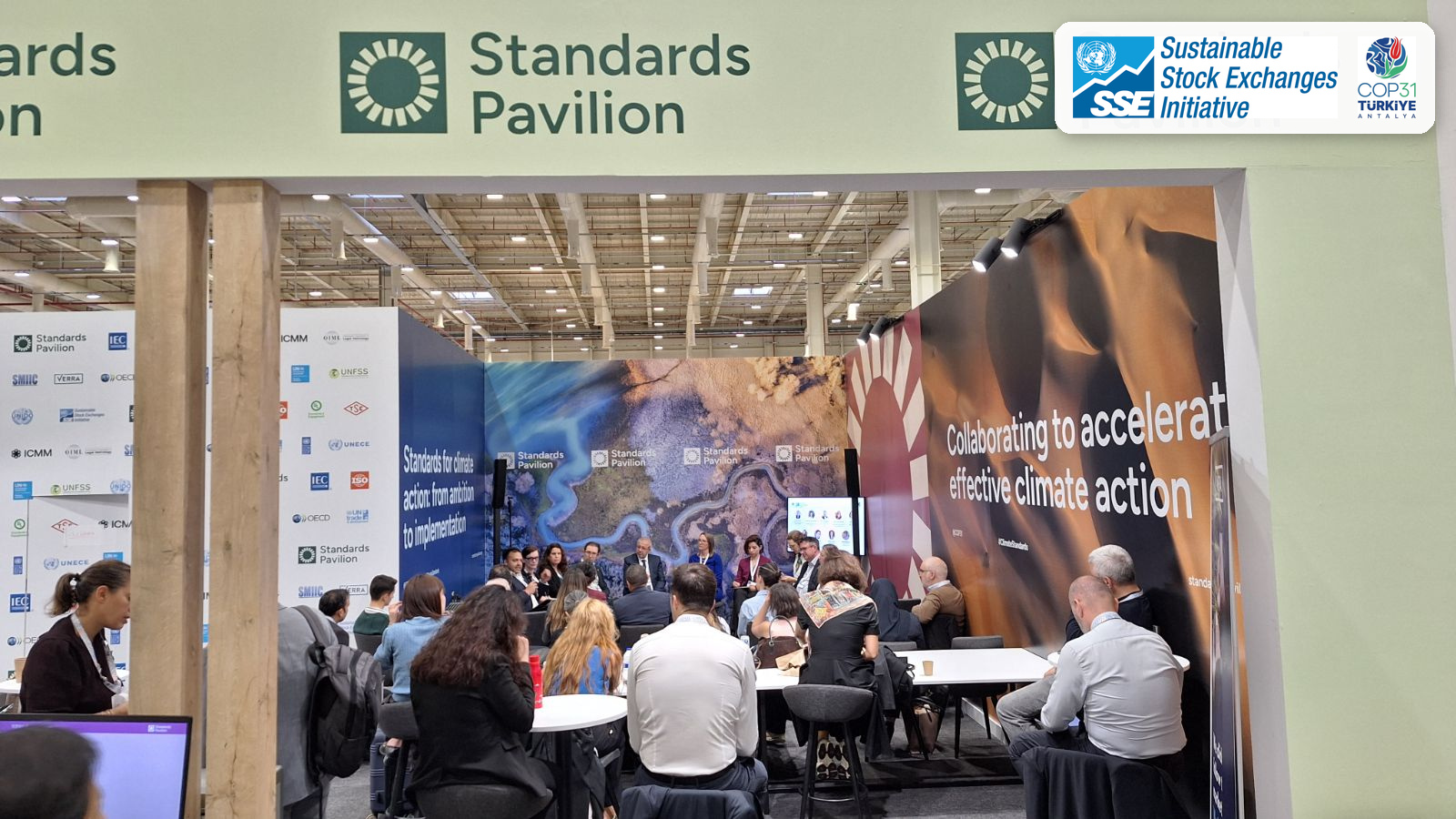
Antalya, Türkiye – The UN Sustainable Stock Exchanges (UN SSE) initiative and its partners convened four events at the UN Climate Change Conference (COP31) on how stock exchanges can support the climate transition. The programme covered corporate climate reporting, the development of financial products and carbon markets, and the skills companies and investors need to put climate information to use.
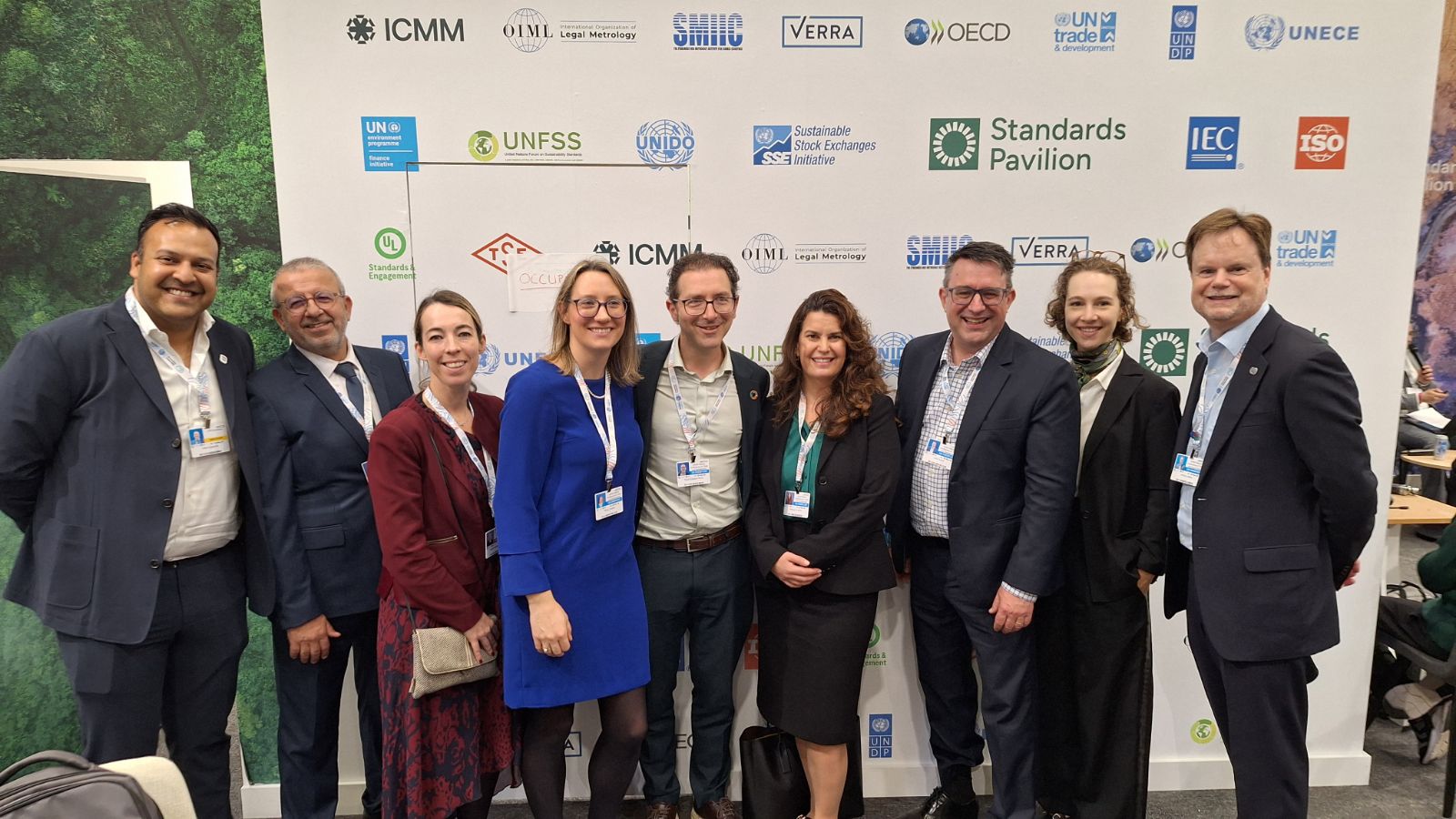
Standards Roundtable: from left to right: Vikas Aggarwal (CDP), Bilel Sahnoun (Tunis Stock Exchange), Elodie Van de Woestyne (LuxSE), Tiffany Grabski (UN SSE), David Harris (LSEG), Camila Corradi Bracco (GRI), John Turner (XBRL), Rose Vennin (IFRS-ISSB), Anthony Miller (UN SSE). Panelists Camila Corradi Bracco (GRI) and Sally Singewood (ISO) missing from group photo.
The series of events kicked off on Finance Day (13 November) when the UN SSE and the Turkish Standards Institution (TSE) co-hosted a roundtable at the Standards Pavilion on how to make corporate climate transition plans easier for investors to find, compare and use. The session connected the work of standard setters, including the IFRS Foundation and the Global Reporting Initiative, with the experience of exchanges and Turkish companies. A central question was how digital reporting can help investors trace information back to company disclosures and assess whether a company’s investments and performance are consistent with its climate targets.
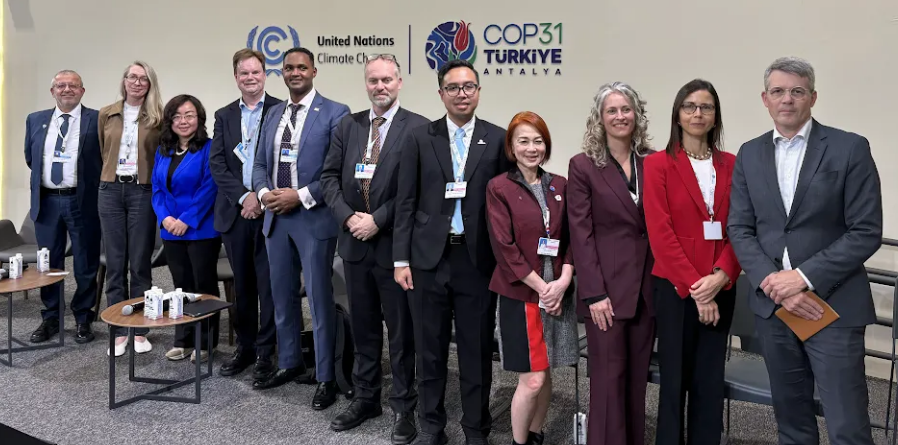
UN SSE Leaders Dialogue from left to right: Bilel Sahnoun (Tunis Stock Exchange), Alicia Kedzierski (UK FCA), Nan Li (UNCTAD), Anthony Miller (UN SSE), Hassan Dudde (Somali Exchange), Roman Kramarchuk (S&P Global Energy), Kautsar Primadi Nurahmad (IDX), Dr. Wei-nee Chen (Bursa Malaysia), Noelia Garcia Nebra (ISO), Paula Redondo Pereira (LuxSE), Eric Usher (UNEP-FI)
Later that day, the UN SSE and the UN Climate Change Global Innovation Hub convened the UN SSE Leaders Dialogue at the UNFCCC Innovation Pavilion. The roundtable brought together exchange leaders from Indonesia, Luxembourg, Malaysia, Somalia, and Tunisia alongside representatives of the UK Financial Conduct Authority, S&P Global Energy and the International Organization for Standardization. The dialogue focused on how exchanges can help direct capital towards the climate transition, from improving the climate data available to investors to developing financial products that respond to their investment needs. During the Leaders Dialogue, two exchanges announced they were joining the UN SSE Climate Leaders - Next Zero Exchange Group.
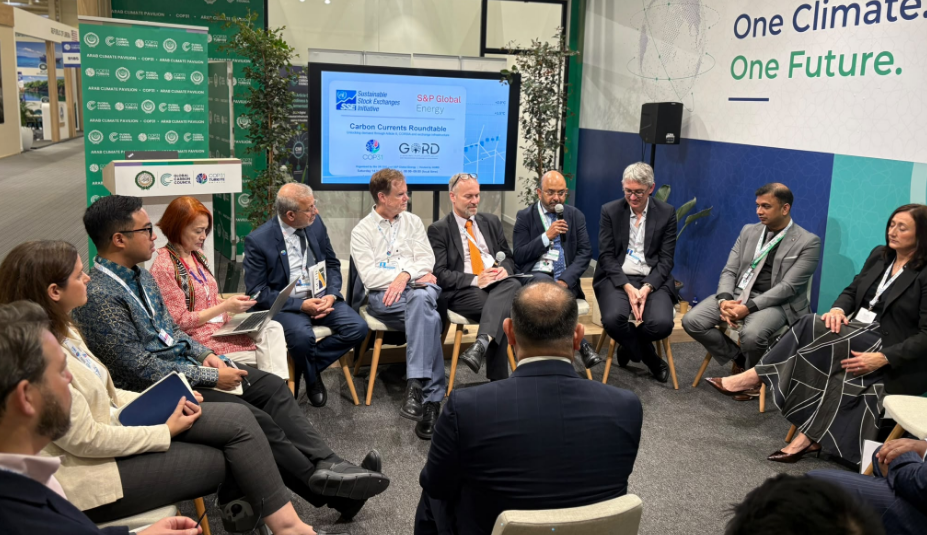
UN SSE and S&P Global Energy Carbon Currents Roundtable from left to right: Mireia Vilaplana (NTT Data), Kautsar Primadi Nurahmad (IDX), Dr. Wei-nee Chen (Bursa Malaysia), Bilel Sahnoun (Bourse de Tunis), Anthony Miller (UN SSE) Roman Kramarchuk (S&P Global Energy), Kishor Rajhansa (Global Carbon Council), Owain Johnson (CME Group), Zaki Mohammed (GORD), Claire Dorrian (LSEG)
On 14 November, the UN SSE and S&P Global Energy convened the Carbon Currents Roundtable, hosted by the Gulf Organisation for Research and Development (GORD) at the Arab Climate Pavilion. The session examined what buyers need to know before purchasing carbon credits, including whether a credit is eligible for its intended use, how host countries authorize it and how registries track its transfer. Drawing on Article 6 of the Paris Agreement and demand from airlines under the Carbon Offsetting and Reduction Scheme for International Aviation (CORSIA), the roundtable explored how exchanges can strengthen buyer confidence through transparent pricing and clear contract terms. This discussion builds on the ongoing partnership between the UN SSE and S&P Global Energy.
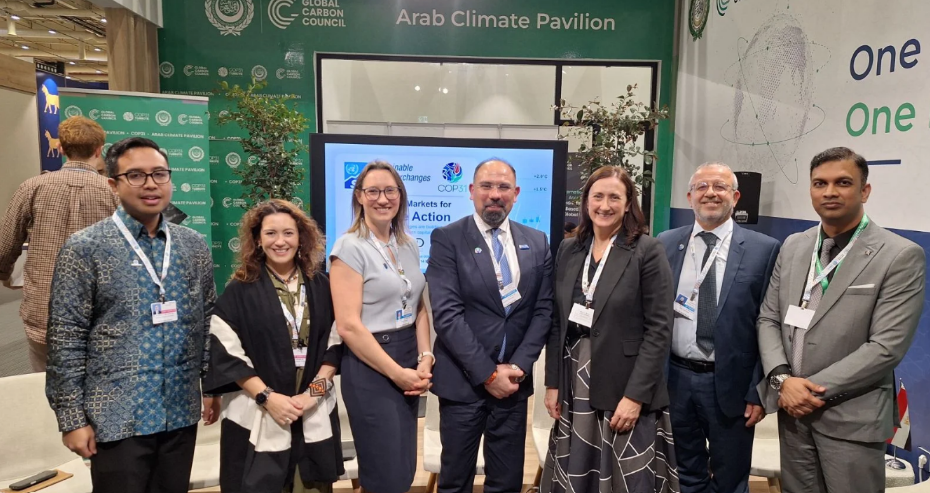
Educating Markets Roundtable: from left to right: Kautsar Primadi Nurahmad (Indonesia Stock Exchange), Danielly A. Mello Freire (GRI), Tiffany Grabski (UN SSE), Waseem Hoeneini (WMSJ), Claire Dorrian (LSEG), Bilel Sahnoun (Bourse de Tunis), Zaki Mohammed (GORD)
On COP31 Education Day, the UN SSE and GORD co-hosted Educating Markets for Climate Action, a session on how exchanges can help listed companies and other market participants apply climate disclosure standards. The discussion drew on the experience of the SSE Academy, whose training on the International Sustainability Standards Board (ISSB) Standards, delivered with the IFRS Foundation and the International Finance Corporation, has reached more than 40,000 participants from over 130 countries. The session considered how exchanges can adapt training to local reporting challenges and reach more companies, particularly in emerging markets.
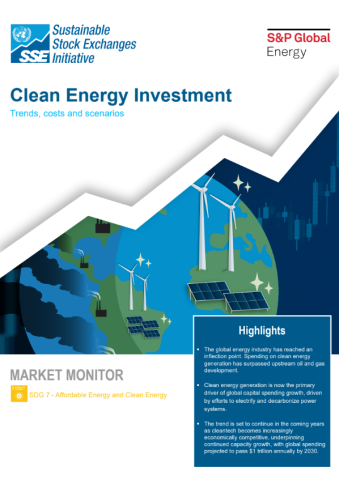
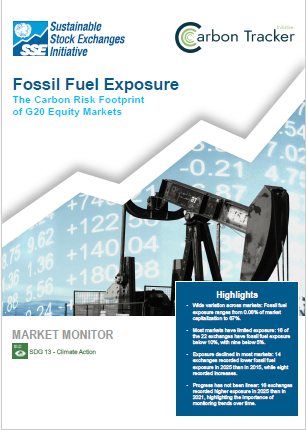
Informing discussions at COP31 and beyond, the UN SSE published two new Market Monitors which provided new data on clean energy investment trends (with S&P Global Energy) and fossil fuel exposure in equity markets (with Carbon Tracker). The publications facilitated ongoing deliberations and provided useful snapshots for exchanges, regulators, investors and other market actors.
Throughout the UN SSE COP31 events, a common theme was how stock exchanges can help companies and investors act on climate information and innovate new forms of climate finance. Guidance and training can help listed companies explain how they intend to meet their climate targets, while comparable disclosures give investors a basis for assessing those plans. Exchanges can also support the transition through the markets they operate, including by making it easier for buyers to assess and trade carbon credits, green bonds and green equity products. These priorities will continue to inform the UN SSE’s work with its network of over 130 SSE Partner Exchanges and its technical assistance and development partners around the world.